Journal
Retired Saturday May 31, 2008, 1 comments
So, I retired an old friend today.
My 1996 VW Golf, the same one that turned 300,000km just a few months ago, has been put out to pasture. It was time.
We were getting to the point that we were spending almost as much maintaining that old car as we would have spend on a loan for a newer one. So it was time to make a decision. Do we keep the old hulk, and live with weekly repairs and the smelly plume of blue smoke that spurt out the (illegal, catalytic-convertor free) exhaust, or do we allow it the dignity of the long sleep?
Well, a 2004 Jetta Wagon 1.8t in our price range made the decision a whole lot easier. 1.9% financing sweetened the deal. A call to the insurance company introduced me to a concept called the ‘wagon effect’. If the car had been a 2004 Golf 1.8t, or a Jetta 1.8t with a trunk instead of a wagon, the insurance would have been significantly more than my 13 year old Golf. But because its a wagon, it’s the same price. Wagon effect FTW!
We bought the car a few weeks ago and love it. Today, I took the Golf, complete with failed brakes, silver hatch (on a black car) and blue smoke to the wreckers, where I got paid slightly more than I expected to for it. May it rest in peace. It was already rusting in pieces, so it shouldn’t be too much of a stretch.
The Jetta is black, like the old car. The kids have nicknamed it ‘Vader’, on account of it being black, with a black interior and black tinted windows. It’s hella fast, and it doesn’t spit out a noxious cloud of blue death every time we start it. And when we drive it sedately, it gets better mileage than the old Golf did.
Except its so damned fast we can’t drive it sedately.
Previously, I discussed proportion as part of an ongoing exploration of the fundamentals of graphic design. I explored how proportion can be used to create order or disorder in a piece, and how it can create depth and visual interest. This time I am going to focus on Rhythm, one of the most difficult topics I will cover in this series.
Rhythm is usually associated with music. This is because it is much easier to detect rhythm aurally than it is visually. This makes it a topic which is more felt than academically understood. As in music, repetition is the basic method of achieving rhythm in a layout. And as with music, there are two types of repetition available to the designer: regular repetition and syncopated repetition.
Regular repetition is accomplished by repeating a visual element at regular intervals. By repeating an element multiple times, you can create a relaxed piece; the reader knows what to expect, and is comforted by this. This relaxed feeling can be used to complement a message that is intended to be calming.

Syncopated repetition involves repetition in more complex patterns. By repeating an element several times, then repeating that pattern multiple times (three elements spaced evenly in a group, and then three of these groups spaced evenly but more distantly, for example), a less relaxed layout can be achieved. And it doesn’t have to be the same element. Elements with dissimilar visual weights can be repeated in pattern, making for even more complex rhythm and more dynamic feeling in a design.

As with all the fundamentals of composition I’ve covered so far, rhythm can be manipulated to create a disharmony in a design, and such disharmony can be used to manipulate the emotional impact of the design, and strengthen a discordant message.

It is important to constantly remember that design is not about making something pretty, it is about complementing the message of the content and achieving clarity. Using rhythm, either to create a more relaxing feel or to add to the dynamism of a layout, we can change the mood and subsequently the impact the piece has on the audience.

Be very very quiet…
Is there anything more savage than kitty hunting blind tulips?
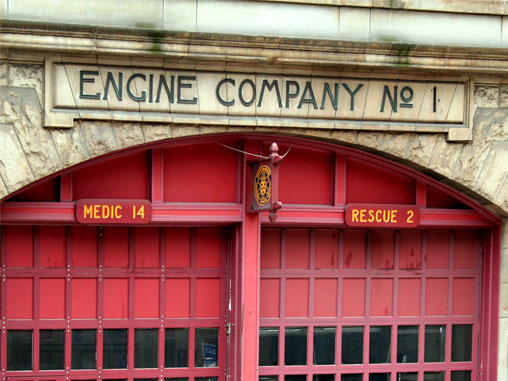
Because of its history as a steel town and possibly because of its name, Pittsburg is a city that gets a bad rap it doesn’t really deserve.
It’s a city full of interesting architecture, fascinating history, and some of the most beautiful geography I’ve ever seen a city nestled into.
All that, plus Crosby and Malkin, too.
Among all the things I am getting tired of hearing from the mainstream media (war, famine, oil prices, recessions, subprime lending mess, American primaries, terrorism, China-Tibet tensions, Olympic protests, cancer, plastics, genetically modified foods, blah blah blah blah blah…) I think that the hybrid thing is really starting to get to me.
Treehugger is falling all over itself mourning Volkswagen’s decision to not bring the hybrid Golf concept car to market. For myself, I can’t help but cheer.
We all know the difference between a hybrid vehicle and a normal one, right? A normal vehicle has an internal combustion engine that outputs power through a spinning shaft to a series of gears that eventually turn the wheels of the vehicle to move it.
A hybrid vehicle has an internal combustion engine that outputs power through a spinning shaft, through a series of gears to an electric generator. The electrical output of this generator charges a bank of nickel-metal hydride (NiMH) batteries. These batteries, in turn, feed electric motors that turn the wheels of the vehicle to move it. To me this seems much more complex than the normal car, and more complexity means more expense.
Hybrid vehicles have the option of operating for some time from the energy stored in the batteries, but until so-called “plug-in” hybrids come to market, this is irrelevant because the power to charge those batteries must come from the internal combustion engine. The difference between a hybrid vehicle and a normal one is therefore one of power transmission from the internal combustion engine to the wheels.
The power transmission system of a hybrid vehicle may be slightly more efficient than that of a normal vehicle, but if it exists, it is a marginal difference. Hybrid vehicles are marking up high efficiency rates because they are powered by small internal combustion engines. The combined mileage (highway and city) of a 2009 VW Jetta TDI (2.0L 4-cylinder diesel engine) is approximately 50mpg, while the Toyota Prius (1.5L f-cylinder gasoline engine), poster child of the hybrid revolution, achieves 46mpg.
You read that right, a standard diesel engine in a bigger car achieves 10% better fuel efficiency than a hybrid. But environmentalism isn’t just about fuel efficiency, regardless of what the mainstream media is telling people. The total environmental impact of a vehicle, from cradle to grave, must be considered.
When that Jetta is finally retired, it will be melted down for scrap, and the metal from that transmission will be recycled (or downcycled, possibly) into new products using processes we already have in place. What happens to the Prius and the batteries in it? And that’s assuming those batteries last the life of the car. Plug-in hybrids might change this equation a bit, but that plug-in energy still needs to be generated somehow (coal seems a likely source, at least for the United States), and those batteries still need to be recycled safely.
As I’ve written before, the Prius is less energy efficient than a Hummer over its entire lifespan. Now take fuel economy into consideration, and compare that Prius to a diesel VW Jetta, or the new TSI engines that VW is working on. Non-hybrid cars that get better mileage than hybrids, at less cradle-to-grave cost to the environment, with far less complexity.
Seems like a better idea to me.
Older posts